Blog
The National Energy Administration issued the 'Standardization Upgrading Action Plan for Energy Carbon Peak and Carbon Neutrality'
On October 9, the National Energy Administration issued a notice on the issuance of the Action Plan for Improving Standardization in Energy Carbon Peak and Carbon Neutrality (hereinafter referred to as the "Action Plan"), clarifying that Six key tasks are to be vigorously promoted: standardization of non-fossil energy, strengthening the construction of a standard system for new power systems, accelerating the improvement of new energy storage technology standards, accelerating the improvement of hydrogen energy technology standards, further improving energy efficiency-related standards, and improving and perfecting carbon emission reduction standards for the energy industry chain.
The Action Plan proposes that, By 2025, a relatively complete energy standard system will be initially established that can effectively support and lead the green and low-carbon transformation of energy. The energy standards will shift from a quantity-based model to a quality-efficiency-based model. The standard organization system will be further improved, and energy standards will interact well with technological innovation and industrial development, effectively promoting the green and low-carbon transformation of energy, energy saving and emission reduction, technological innovation, and carbon emission reduction in the industrial chain.
——Establish and improve a renewable energy standard system mainly based on photovoltaic and wind power, research and establish a standard system to support the construction of new power systems, accelerate the improvement of new energy storage standard systems, and effectively support the development, construction, grid connection, and consumption of large-scale wind and photovoltaic bases and distributed energy.
——Develop a number of technical standards related to emerging technologies and carbon emission reduction in the industrial chain, improve the relevant standard organization system, and achieve full coverage of standards for relevant links in the carbon peak industrial chain in the energy field.
——Revise a number of standards related to the energy efficiency of conventional energy production, conversion, and transmission and utilization, improve standard requirements and levels, and promote and regulate comprehensive resource utilization and energy efficiency improvement.
By 2030, a structurally optimized and advanced energy standard system will be established, with energy standards closely coordinated with technological innovation and industrial transformation, and energy standardization strongly supporting and ensuring the carbon peak and carbon neutrality of the energy sector.
The original text of the notice is as follows:
Notice of the National Energy Administration on Issuing the Action Plan for Improving Standardization in Energy Carbon Peak and Carbon Neutrality
Energy Bureaus of all provinces (autonomous regions, municipalities directly under the Central Government), Development and Reform Commissions of relevant provinces (autonomous regions, municipalities directly under the Central Government) and the Xinjiang Production and Construction Corps, relevant central energy enterprises, and relevant standardization management institutions:
In order to thoroughly implement the major strategic decisions of the CPC Central Committee and the State Council on carbon peaking and carbon neutrality, earnestly implement the Opinions of the CPC Central Committee and the State Council on comprehensively, accurately, and fully implementing the new development philosophy and doing a good job in carbon peaking and carbon neutrality, the Notice of the State Council on Issuing the Action Plan for Carbon Peaking Before 2030, and the Notice of the CPC Central Committee and the State Council on Issuing the Outline for the Development of National Standardization, and to give full play to the technical support and leading role of standards in promoting the green and low-carbon transformation of energy, our bureau has compiled the Action Plan for Improving Standardization in Energy Carbon Peak and Carbon Neutrality, which is now issued to you for your implementation in conjunction with the actual situation.
National Energy Administration
September 20, 2022
Attachment: Action Plan for Improving Standardization in Energy Carbon Peak and Carbon Neutrality
Promoting the green and low-carbon transformation of energy is a key measure to implement the major strategic decisions of the CPC Central Committee and the State Council on carbon peaking and carbon neutrality. Standards are the technical support and basic institutional system for the green and low-carbon transformation of energy. In order to implement the Opinions of the CPC Central Committee and the State Council on comprehensively, accurately, and fully implementing the new development philosophy and doing a good job in carbon peaking and carbon neutrality, the Notice of the State Council on Issuing the Action Plan for Carbon Peaking Before 2030, and the Notice of the CPC Central Committee and the State Council on Issuing the Outline for the Development of National Standardization, further improve the level of energy standardization, and strongly support energy carbon peaking and carbon neutrality, this action plan is formulated.
I. Overall Requirements
(1) Guiding Ideology
Guided by Xi Jinping Thought on Socialism with Chinese Characteristics for a New Era, fully implementing the spirit of the 19th National Congress of the CPC and its subsequent plenary sessions, basing ourselves on the new development stage, comprehensively, accurately, and fully implementing the new development philosophy, building a new development pattern, focusing on the goals of carbon peaking and carbon neutrality, thoroughly implementing the new energy security strategy of "four revolutions and one cooperation," closely combining the relevant implementation plans for carbon peaking in the energy sector, highlighting key areas such as the green and low-carbon transformation of energy, the development of emerging technologies and industries, energy efficiency improvement, and carbon emission reduction in the industrial chain, coordinating with technological innovation and industrial development, improving relevant energy technology standards and regulations, increasing the supply of standards in emerging fields, accelerating standard updates and upgrades, continuously improving standard quality, and providing strong support for energy carbon peaking and carbon neutrality.
(2) Working Principles
Demand-driven, key promotion. Closely focusing on the major decisions and deployments of the CPC Central Committee and the State Council, effectively supporting the work of carbon peaking and carbon neutrality in the energy sector, and highlighting the key promotion of standardization in areas directly related to the green and low-carbon transformation of energy, technological innovation, energy efficiency improvement, and carbon emission reduction in the industrial chain.
Commonality first, urgency first. Accelerating the formulation and revision of common basic standards related to the green and low-carbon transformation of energy and carbon emission reduction, accelerating the improvement of urgently needed standards for energy carbon peaking, further improving the requirements and quality of energy-saving and emission-reduction standards, and effectively meeting the standard needs of energy transformation.
Synergistic linkage, seeking practical results. Focusing on the development needs of the green and low-carbon transformation of energy, adhering to the synergistic linkage of technological research and development, standard development, and industrial development, and effectively playing the leading, supporting, and regulatory role of standards in the process of collaborative innovation and achievement transformation.
Systematic layout, coordination and consistency. Systematically planning and laying out a standard system covering the entire industrial chain of carbon peaking and carbon neutrality in the energy sector, and comprehensively promoting the construction of a new standard system that coordinates energy industry standards with national and group-related standards.
(3) Work Objectives
By 2025, a relatively complete energy standard system will be initially established that can effectively support and lead the green and low-carbon transformation of energy. The energy standards will shift from a quantity-based model to a quality-efficiency-based model. The standard organization system will be further improved, and energy standards will interact well with technological innovation and industrial development, effectively promoting the green and low-carbon transformation of energy, energy saving and emission reduction, technological innovation, and carbon emission reduction in the industrial chain.
——Establish and improve a renewable energy standard system mainly based on photovoltaic and wind power, research and establish a standard system to support the construction of new power systems, accelerate the improvement of new energy storage standard systems, and effectively support the development, construction, grid connection, and consumption of large-scale wind and photovoltaic bases and distributed energy.
——Develop a number of technical standards related to emerging technologies and carbon emission reduction in the industrial chain, improve the relevant standard organization system, and achieve full coverage of standards for relevant links in the carbon peak industrial chain in the energy field.
——Revise a number of standards related to the energy efficiency of conventional energy production, conversion, and transmission and utilization, improve standard requirements and levels, and promote and regulate comprehensive resource utilization and energy efficiency improvement.
By 2030, a structurally optimized and advanced energy standard system will be established, with energy standards closely coordinated with technological innovation and industrial transformation, and energy standardization strongly supporting and ensuring the carbon peak and carbon neutrality of the energy sector.
II. Key Tasks
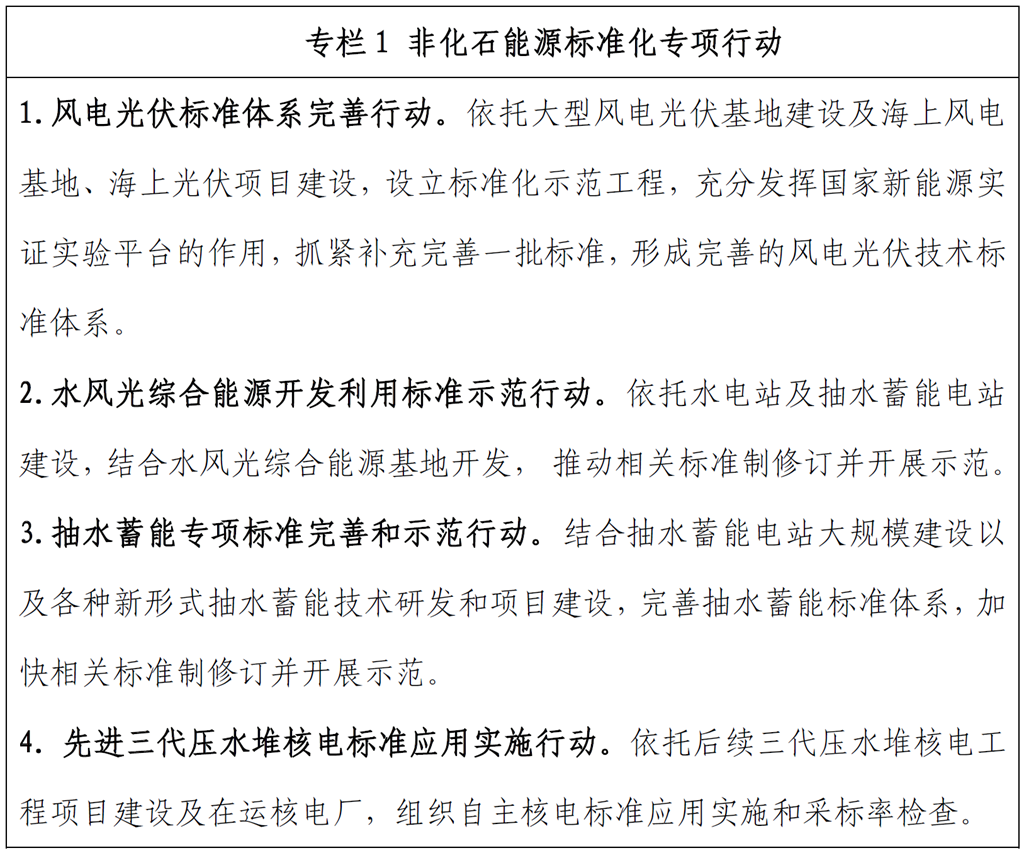
(1) Vigorously promoting the standardization of non-fossil energy
Accelerate the improvement of renewable energy standards such as wind power and photovoltaics. Expedite the improvement of relevant technical standards for the construction of large-scale wind and photovoltaic bases in desert, Gobi, and barren areas, accelerate the formulation of technical standards for offshore wind power development and the integrated utilization of multiple energy sources, promote the formulation and revision of relevant standards for the on-site development and utilization of distributed wind power, distributed photovoltaics, and household photovoltaics, and establish and improve a photovoltaic power generation and solar thermal power generation standard system. Formulate standards for the decommissioning, recycling, and reuse of wind turbines and photovoltaic components.
Improve the standard system for hydropower and pumped hydro storage. Further improve and upgrade relevant technical standards for major hydropower projects, accelerate the accumulation of relevant technical standards for the development of high-head and large-capacity hydropower, continuously improve technical standards for intelligent hydropower construction, informatization and digitalization, hydropower unit equipment renovation and upgrading, and energy efficiency improvement. Accelerate the formulation of standards related to basin-wide cascade scheduling and safety emergency response and post-assessment of sustainable hydropower development. Improve technical standards for pumped hydro storage and hydropower cascade integration and transformation. Promote the formulation and revision of relevant standards in conjunction with the needs of integrated energy development and utilization of hydropower, wind power, and photovoltaics.
Promote the revision and formulation of standards for the comprehensive utilization of various renewable energy sources. Continue to promote the technical standards for the conversion and utilization of biomass energy (including biomass power generation, biogas production, cellulosic fuel ethanol, biodiesel, bio-aviation fuel, bio-formed fuel, etc.), geothermal energy development and utilization, and ocean energy development and utilization, and develop standards for clean heating such as biomass energy, solar energy, heat pumps, and clean stoves.
Further improve the nuclear power standard system. Develop an advanced third-generation pressurized water reactor nuclear power standard system and promote the application and implementation of independent standards. Carry out research on the standard systems for high-temperature gas-cooled reactors, fast reactors and other nuclear power technologies with fourth-generation characteristics, as well as modular small reactors, and offshore floating nuclear power platforms, focusing on improving the level of nuclear safety-related technical standards.
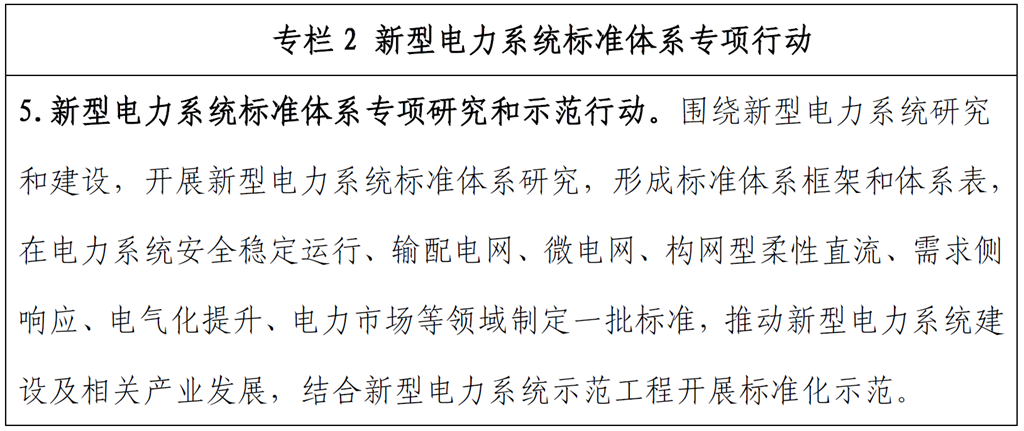
(II) Strengthen the construction of the new power system standard system
Conduct research on the needs of safety and stable operation standards for new power systems and the adaptability of existing standards. Continuously improve standards covering key areas such as analysis and understanding, planning and design, operation and control, fault prevention, and grid-source coordination of new power systems, and strengthen the construction of safety standards for new energy power generation involving the grid.
Further optimize and improve the construction of the ultra-high voltage AC and DC standard system to provide standard support for the construction of the main grid and inter-provincial and regional transmission channels. Vigorously promote the standardization of smart distribution networks, improve standards for on-site consumption of distributed power sources and flexible access to diversified loads, and enhance the intelligent control and two-way interaction capabilities of distribution networks. Accelerate the improvement of microgrid standards based on the consumption of new energy sources, strengthen the formulation of standards for multi-energy complementation, multi-energy conversion and comprehensive utilization, and coordinated control of sources, networks, loads, and storage. Promote the construction of a grid-type flexible DC technology standard system and carry out the development of core standards for grid-type DC performance and testing.
Continuously promote the development of supporting standards for the development and application of demand-side electricity resources to effectively expand the regulating resources of the power system. Establish and improve the virtual power plant standard system and promote the revision and formulation of key standards in the virtual power plant field. Promote the inclusion of controllable charging loads such as electric vehicles and battery swapping stations into grid optimization control, and promote the revision and formulation of standards for flexible regulation of electric vehicle charging and other aspects. Continuously promote the improvement of the electrification level of energy consumption terminals, promote the formulation of electrification standards on the energy consumption side, and promote the coordinated development of electrification in the construction and transportation sectors.
Promote the construction of a power market standard system, and promote the formulation of key standards such as basic and general standards for the power market, market access technology standards, power market business technology standards, and power market operation technology standards.
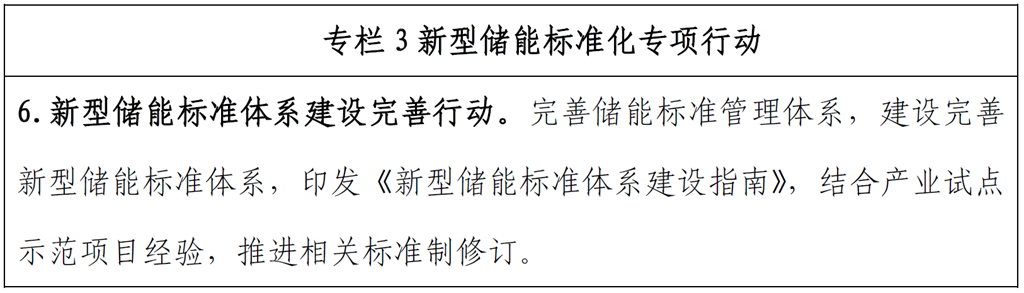
(III) Accelerate the improvement of new energy storage technology standards
Improve the new energy storage standard management system. In combination with the needs of new power system construction, and based on the needs of new energy power generation grid connection configuration and integrated source-network-load-storage, we will urgently establish a standard system covering the entire process of new energy storage project construction and production operation, as well as safety, environmental protection, and technical management.
Refine the grid connection and application scenarios of energy storage power stations, and improve standards for safety design, testing, and acceptance of grid connection systems. Accelerate the formulation of mandatory national standards for new energy storage safety, such as lithium batteries for energy storage and the safety of energy storage power stations.
In combination with the innovation of new energy storage technologies and the expansion of application scenarios, timely carry out the revision and formulation of relevant standards, and comprehensively promote the coordinated development of research and development, demonstration application, and standard formulation of various new energy storage technologies.
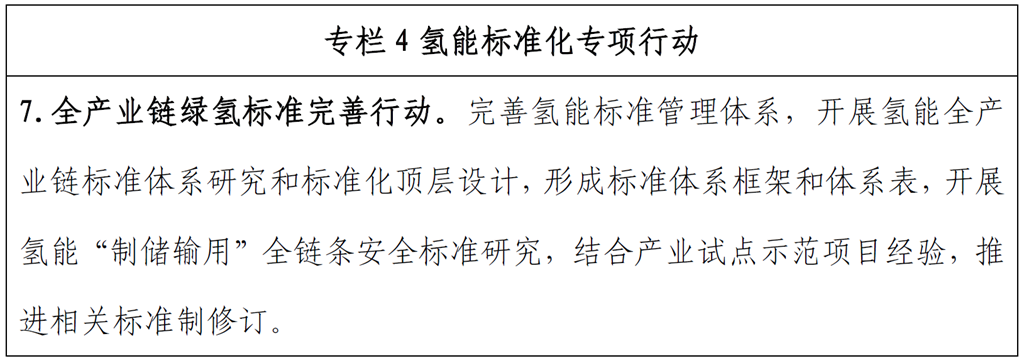
(IV) Accelerate the improvement of hydrogen energy technology standards
Further promote the standardized management of hydrogen energy industry development and accelerate the improvement of the top-level design and standard system of hydrogen energy. Carry out the development of technical standards for hydrogen production, hydrogen storage, hydrogen transportation, hydrogen refueling, and diversified applications of hydrogen energy to support the development of the entire hydrogen energy "production, storage, transportation, and use" industrial chain.
Focus on the fields of renewable energy hydrogen production, electricity-hydrogen coupling, fuel cells and systems, and increase the effective supply of standards. Establish and improve basic standards for hydrogen energy quality and hydrogen energy testing and evaluation.
(V) Further improve energy efficiency-related standards
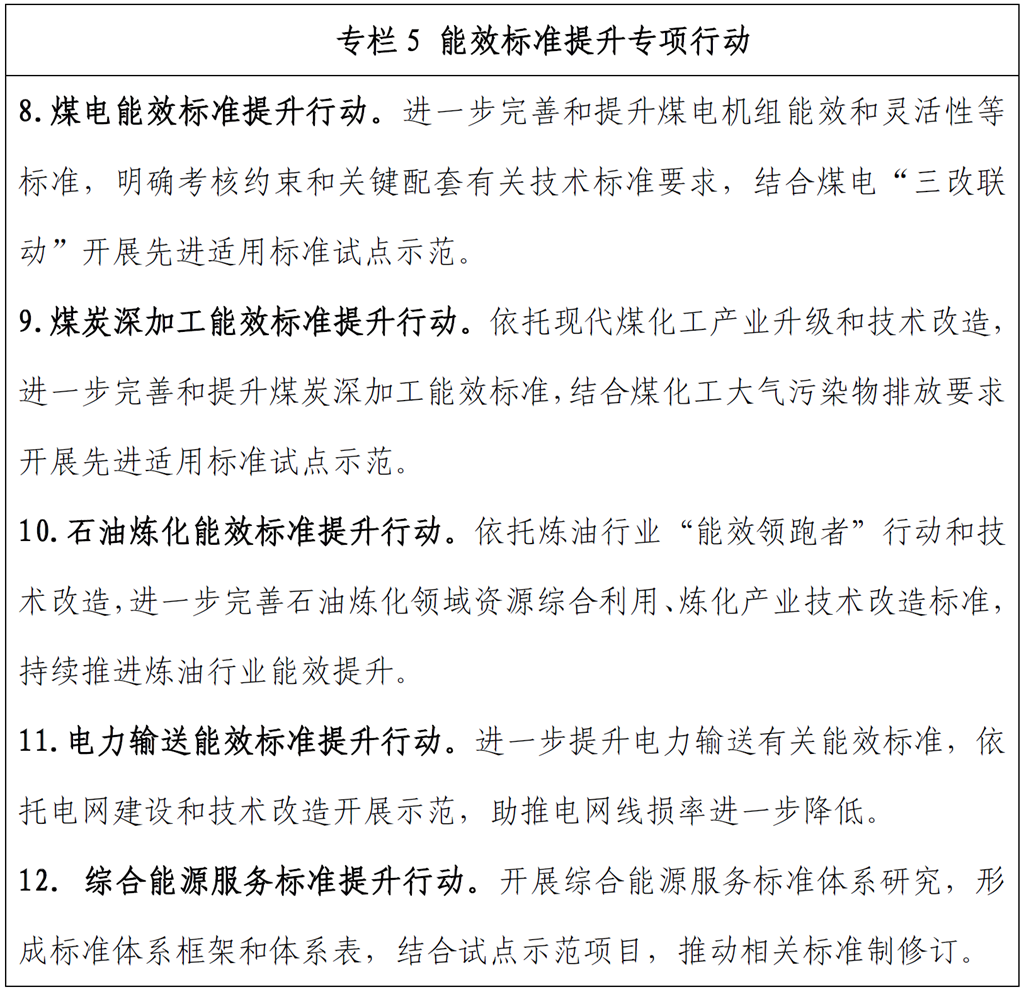
Organize and promote the revision and formulation of standards related to the green and efficient production, conversion, and utilization of coal, oil, and natural gas. Focus on promoting the improvement of energy-saving and carbon-reduction related standards in the fields of clean and efficient coal production and utilization and petroleum refining, further improving energy efficiency-related standards for coal-fired power generation and coal deep processing, and improving and improving energy efficiency-related standards for petroleum refining.
Further improve the level of standards for the comprehensive utilization of coal and oil and gas resources, improve technical standards for the comprehensive utilization of coal gangue, fly ash, and tailings, and strengthen the requirements of standards for the recovery and utilization of waste heat, waste pressure, and cold energy in the stages of coal and oil and gas development, conversion, and storage and transportation. Promote the improvement of standards for ecological environment governance in coal and oil and gas development.
Further improve and enhance power transmission energy efficiency standards. In combination with the research on the new power system standard system, promote the revision and formulation of a number of standards related to new energy-saving and environmentally friendly power equipment and materials, and further improve the energy efficiency standards of key power transmission equipment. Promote the improvement of energy efficiency standards for load-side re-electrification.
Accelerate the promotion of the construction of a comprehensive energy service standard system and the development of basic standards. Focus on promoting the development of standards for comprehensive energy service planning and design, comprehensive energy utilization, energy services, energy efficiency monitoring and diagnosis, energy management and operation, system operation quality, service quality evaluation, and energy and multi-field integration.
(VI) Improve and perfect carbon emission reduction standards for the energy industry chain
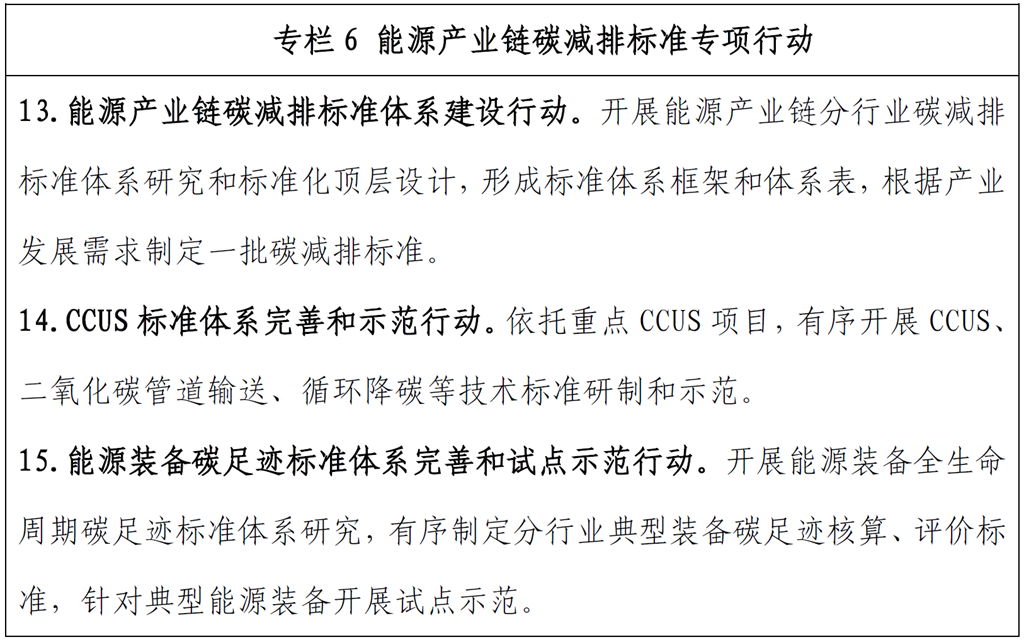
In coordination with national standards, accelerate the construction of standardized management, top-level design, and standard systems for carbon emission reduction in the energy field. Study and formulate carbon footprint accounting standards for energy sub-sectors, improve standards for carbon emission accounting and verification, carbon emission reduction quantification assessment, and pollution reduction and carbon reduction control monitoring in the energy field, and conduct research on the development of life-cycle carbon footprint standards for important products of energy equipment. Serve the needs of establishing a national carbon market mechanism and accelerate the development of key standards for energy enterprise carbon trading and offset mechanisms.
Focusing on the needs of technological research and development and project construction related to carbon capture, utilization, and storage (CCUS) in the energy field, accelerate the improvement of relevant standard management systems and standard systems, and promote the revision and formulation of standards for key links such as carbon dioxide capture, transportation, storage monitoring, leakage warning, and oil displacement.
Accelerate the improvement of the technical standard system for digitalization of the energy industry chain and promote the revision and formulation of technical standards for digital twins, big energy data, and intelligence in various fields of energy.
III. Organization and Implementation
(I) Strengthen organization and implementation. Establish a leading group and expert advisory committee for standardization of carbon peaking and carbon neutrality in the energy field to accurately grasp and efficiently promote the standardization work of carbon peaking and carbon neutrality in the energy field. For the revision and formulation of key standards in areas with a wide range of involvement, the National Energy Administration will take the lead in establishing standard working groups across standard committees to effectively strengthen communication and coordination among relevant standard committees. Various energy standardization management institutions will, in accordance with their respective responsibilities, organize relevant standard committees to formulate implementation plans for carbon peaking and carbon neutrality standardization work in various fields, and specify responsibilities and work requirements. Encourage and fully absorb energy enterprises, research institutions, and universities to participate in standard formulation and demonstration based on energy construction projects and major scientific research projects.
(2) Increase policy support. Increase the supply of carbon peak and carbon neutrality standards in the energy sector, and tilt the number of annual standard projects towards relevant fields. Relevant industries and enterprises in various fields should further increase the financial support for standardization, allocate standardization funds for key projects and scientific research projects according to actual needs, coordinate government funds for standard work, and increase financial support for standards in relevant fields. Accelerate the formulation and revision of key standards, and shorten the cycle of standard formulation and revision to within 18 months. Commendation and rewards for excellent "dual carbon" standards and talents in the energy field.
(3) Carry out standard demonstration. Based on the tasks of various special actions, establish demonstrations based on relevant projects, adopt the "revealing the list and competing for the post" approach, and organize project owners, R&D and manufacturing units, and standardization institutions to jointly carry out pilot demonstrations of advanced and applicable standards. According to the actual situation, and after approval by the competent energy industry department, relevant demonstration projects will enjoy the support policies for the demonstration application of major technical equipment in the energy field. Effectively strengthen the close coordination between the entire stages of project planning, design, construction, acceptance, and operation and the formulation and revision of relevant standards, and promote the coordinated development of technological research and development, project construction, industrial development, and standardization.
(4) Strengthen overall coordination. Strengthen coordination and connection with national standards and group standards, and promote the formation of a new standard system with organic connections between national standards, industry standards, and group standards. Deepen international cooperation on energy standards, broaden channels for international standardization, improve the docking and compatibility with relevant international standard systems, promote the "going out" of key standards, and improve the level of international standardization.
(5) Strengthen supervision and evaluation. Establish a mechanism for feedback and evaluation of standard implementation, strengthen statistical analysis of the implementation of energy standards, conduct dynamic evaluation, timely grasp the situation, identify problems, and strengthen standard formulation, revision, and review based on feedback and evaluation. Strengthen process supervision and acceptance of standard demonstration projects, and relevant demonstration projects need to formulate clear work plans and organize acceptance one year after commissioning.
Information Source: National Energy Administration
| Article Source: C DCC
• END •
Disclaimer: Some of the publicly available information collected on this website comes from the Internet. The purpose of reprinting is to convey more information and for online sharing, and does not represent this website's agreement with its views or responsibility for its authenticity, nor does it constitute any other suggestions. The content of the article is for reference only. If you find any works on the website that infringe your intellectual property rights, please contact us, and we will modify or delete them in a timely manner.
Advertising Space

DencoHappel (Beijing) Refrigeration Technology Co., Ltd.
Address: Greenland Qihang International North District, Houshayushu, Shunyi District, Beijing
Email: info.cn@dencohappelgroup.com
Scan the mobile app to view
Copyright: Degao Hebai (Beijing) Refrigeration Technology Co., Ltd Powered by:CEglobal
在线客服添加返回顶部
图片alt标题设置: DencoHappel (Beijing) Refrigeration Technology Co., Ltd.
循环体没有内容时: The information is being compiled, please look forward to it.
CSS / JS 文件放置地